Learning earthquake-resistant construction through practice
The PROCAMM pilot site in Douzrou serves as a construction school where craftspeople and trainees explore earthquake-resistant building techniques using locally available natural materials.
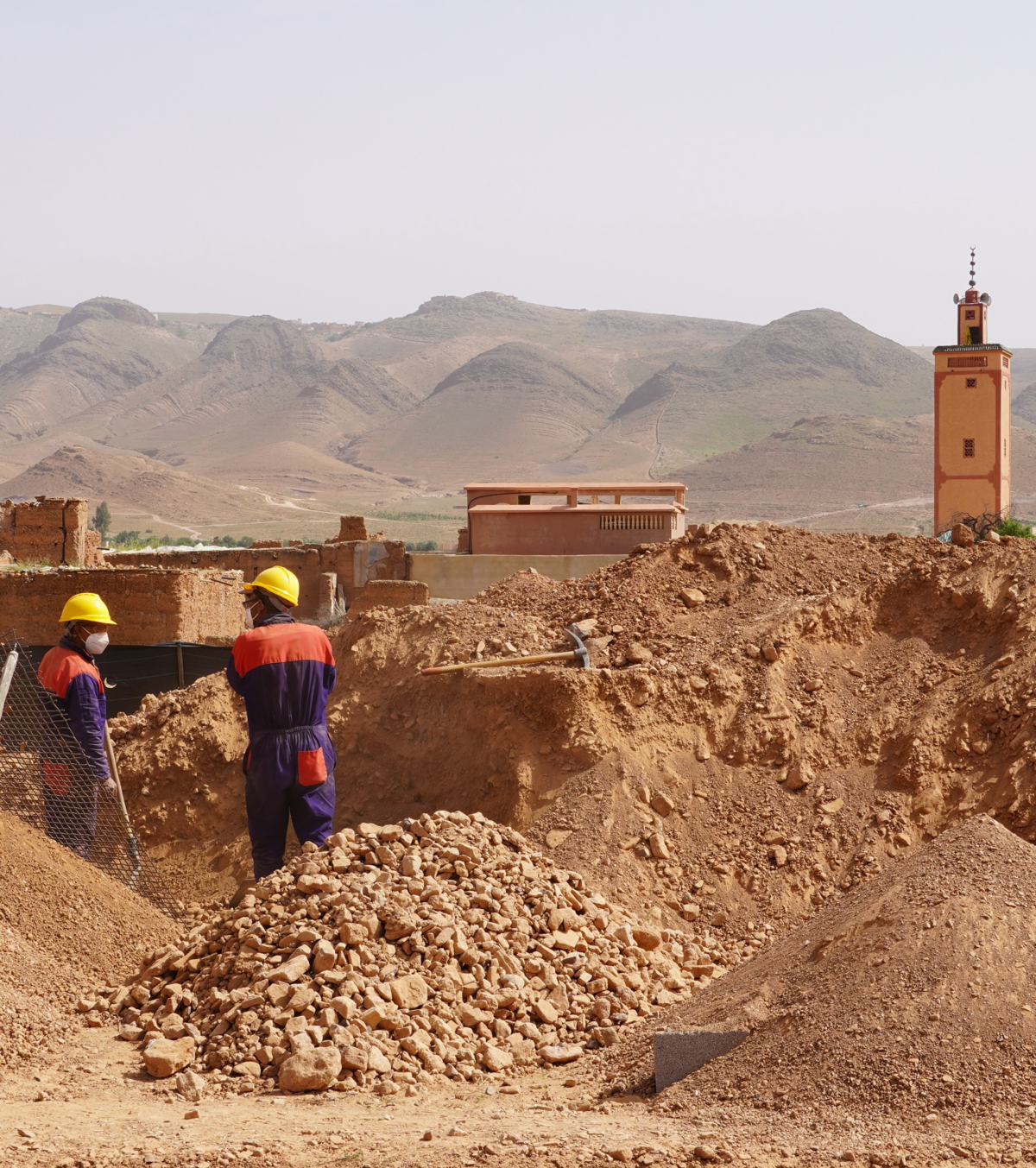
The PROCAMM pilot site in Douzrou serves as a construction school where craftspeople and trainees explore earthquake-resistant building techniques using locally available natural materials.
The PROCAMM pilot site in Douzrou serves as a construction school where craftspeople and trainees explore earthquake-resistant building techniques using locally available natural materials.
Following the 2023 earthquake in Morocco, the PROCAMM project is combining a pilot construction site in Douzrou, municipality of Taliouine, with practical training, open-access manuals and academic exchange. By testing earthquake-resistant solutions using stone, rammed earth and adobe, the project aims to strengthen local building practice while respecting the environmental, cultural and technical value of natural materials.
The earthquake that struck Morocco on 8 September 2023 caused widespread damage, particularly in rural and mountainous areas where stone and earth remain important construction materials. Post-earthquake assessments identified recurring vulnerabilities, including walls failing out of plane, missing ring beams, foundations built at different levels and construction on slopes.
PROCAMM - Promotion de la construction antisismique en matériaux naturels au Maroc - is a Moroccan-Swiss initiative designed to turn these lessons into practical and widely accessible knowledge. The project promotes construction methods that improve seismic safety while respecting local practices, cultural identity, environmental sustainability and current Moroccan standards.
At the centre of the project is a pilot development in Douzrou. Four workshop buildings will provide a classroom, kitchen, production room and storage space, complemented by a nursery school, landscaping and an open communal area. The site also functions as a chantier école, or construction school, offering regular theoretical and practical training for masons and other local building professionals.
The pilot explores natural stone, rammed earth and adobe alongside different reinforcement techniques. Solutions are assessed in terms of safety, durability, local availability, environmental impact, reproducibility and their ability to meet formal approval and insurance requirements. The project therefore connects traditional knowledge with engineering, building codes and contemporary quality assurance.
The work is organised around four complementary pillars. The first combines the pilot buildings with hands-on training. The second produces three practical manuals for rural craftspeople and self-builders, covering the full process from planning and permits to construction, finishing and maintenance. The manuals are being developed in French and Standard Arabic, using simple language, illustrations, exercises and examples of unsafe practices observed after the 2023 earthquake.
The third pillar creates exchange between Moroccan and Swiss universities, supporting conferences, student projects and research partnerships on natural materials and seismic resistance. The fourth develops educational videos and integrates the project's experience into academic teaching. Plans, manuals, training methods and educational resources are intended to be documented and shared freely through a public website.
PROCAMM demonstrates that earthquake safety and natural construction need not be opposing goals. By linking a real building project with craftspeople, engineers, architects, authorities and universities, it seeks to build confidence in locally rooted construction methods and make safer practice easier to understand, approve and reproduce.
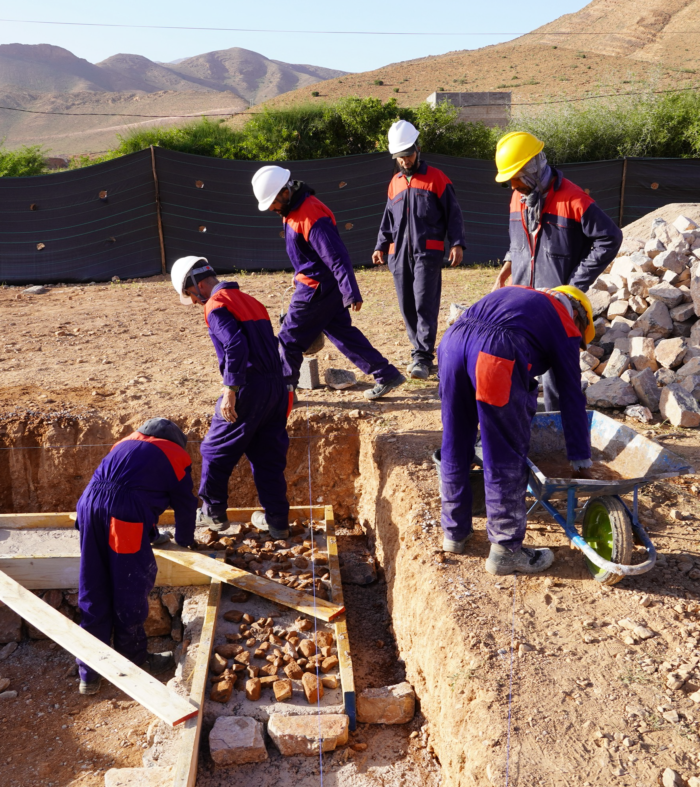
The pilot site combines construction, testing and hands-on learning in a rural High Atlas setting.
Learning from the 2023 earthquake: "Post-earthquake assessments highlighted recurring weaknesses such as missing ring beams, out-of-plane wall failure and foundations built at different levels. The project translates these findings into simple construction measures."
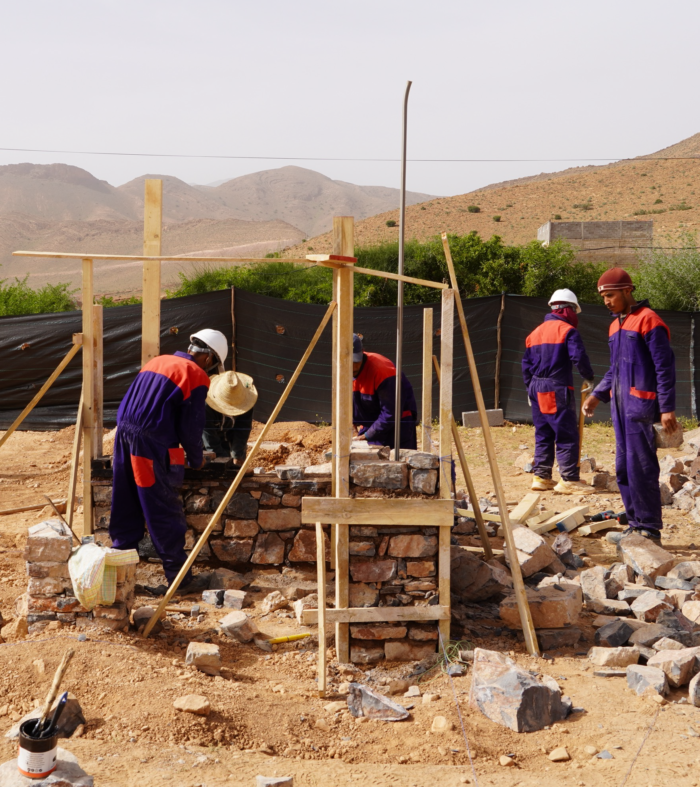
Different natural materials and reinforcement solutions are tested for safety, availability and reproducibility.
From pilot to open knowledge: "Architectural plans, technical solutions, training methods, manuals and educational videos will be documented and made publicly accessible so that lessons from Douzrou can be adapted elsewhere."
An overview of PROCAMM’s objectives and four pillars: pilot construction and training, practical manuals, academic exchange and educational knowledge transfer.
Why natural materials matter: "Stone and earth are locally available, culturally rooted and associated with a low environmental impact. PROCAMM examines how these materials can meet contemporary expectations for seismic safety and durability."
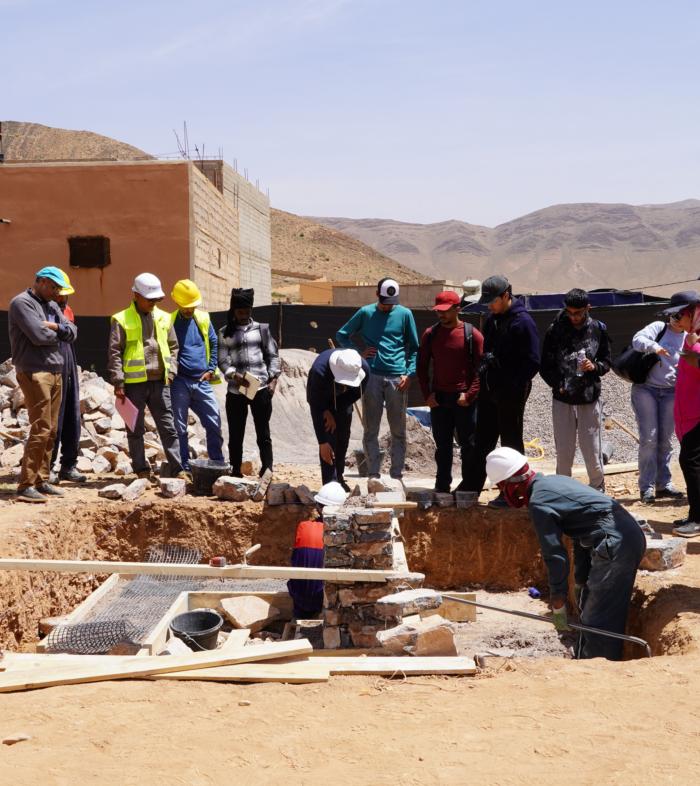
The site functions as a construction school, combining theoretical modules with practical training.
Practical guidance: "Three illustrated manuals will guide rural craftspeople and self-builders from site selection, budgeting and permits through construction, finishing and maintenance. French and Standard Arabic versions are planned for free distribution."
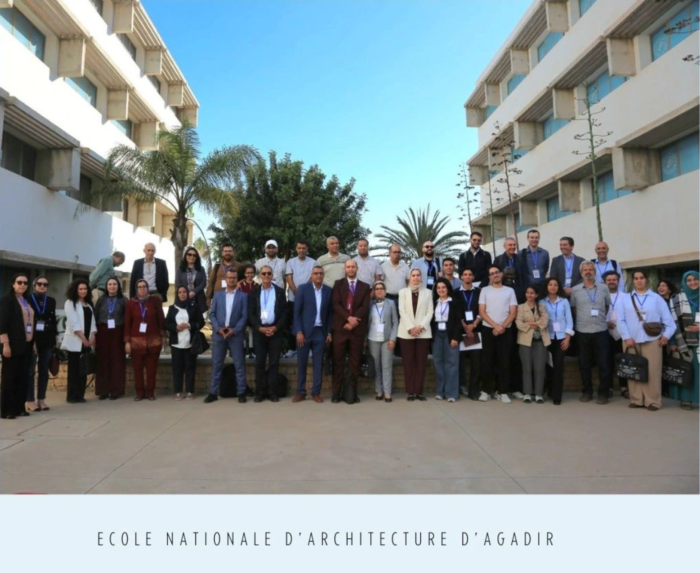
Moroccan and Swiss practitioners and universities connect site-based questions with teaching and research.